Recovery often shows most clearly in what a person can do. Studies check how far a joint bends, how strong a muscle is, how steady a person stands and how everyday tasks are going. This guide explains those checks.
Range of motion: how far a joint moves
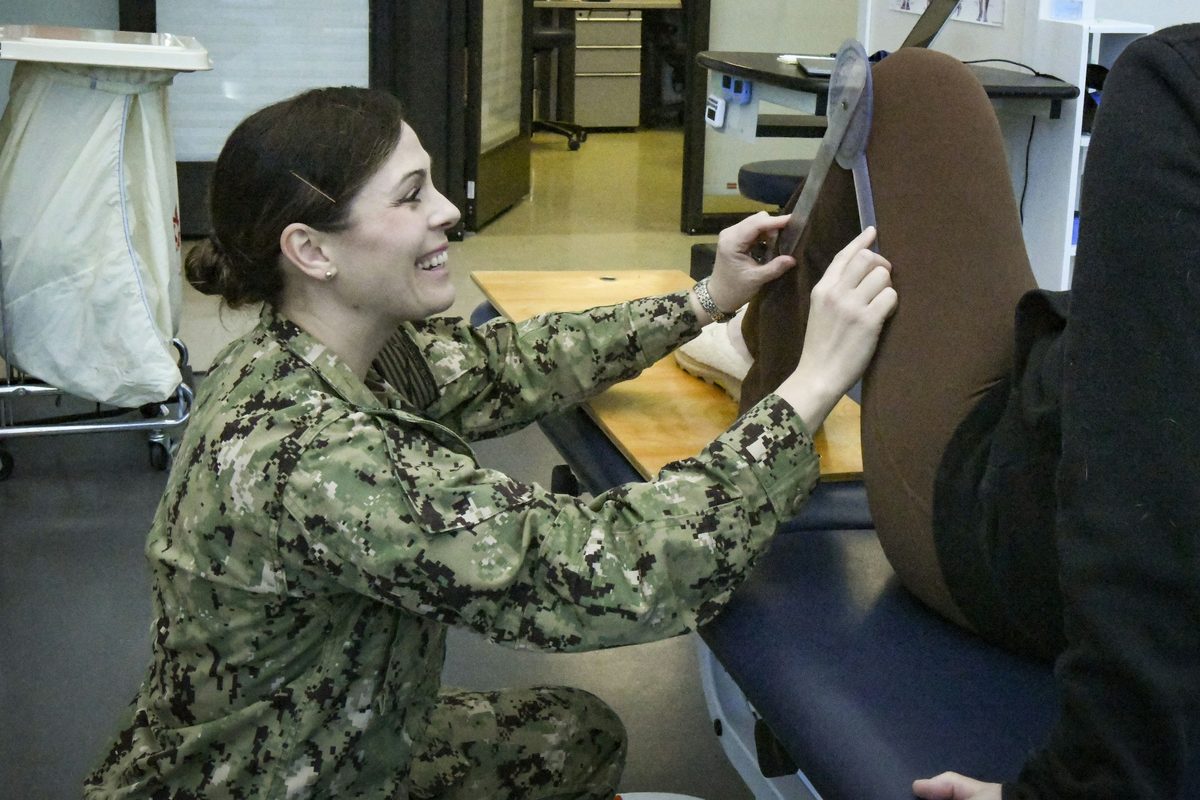
After a shoulder repair or a knee replacement, one of the first things anyone watches is how far the joint moves. A study usually measures this with a goniometer, a hinged ruler lined up along the limb, or with a small sensor or phone app. The reading shows how much bend or reach has come back since the last check.
Studies often record two kinds of movement. In one, you move the joint as far as you can on your own. In the other, the examiner moves it gently for you. A gap between the two can tell a physical therapist whether weakness or stiffness is holding the joint back.
Strength checks for a healing shoulder or knee
Strength comes back more slowly than movement, so studies track it over months. Common checks include pushing against an examiner's hand, pressing on a handheld gauge or using a machine that records the force of a muscle as you straighten or bend the knee.
In knee ligament research, a key question is how the injured leg compares with the other one. Many studies express strength on the healing side against the healthy side. That comparison helps judge readiness for running, jumping and turning, and it comes up again when studies look at getting back to sport.
Standing, walking and staying steady
Some of the most telling checks are simple to watch. A study may time how long it takes you to stand up from a chair, walk a short marked course and sit back down. It may ask you to stand on one leg, walk heel to toe or climb a few stairs while an examiner looks on.
These checks are common in research on hip and knee replacement and on concussion, where balance can stay off for a while. The list below shows tests that recovery studies often use. A study in your area may use some of them, all of them or something else entirely.
- Timed tests of standing up, walking a short course and sitting again
- Standing on one leg, with eyes open and then closed
- Hop tests that set one leg against the other after knee ligament repair
- Walking speed, and the distance covered in a set time
- Eye movement and balance checks after a concussion
Everyday tasks as a measure of recovery
Readings from a clinic only tell part of the story. Studies also ask whether you can reach a high shelf, carry shopping, put on socks, kneel, drive or sleep on the injured side. These tasks show whether the movement and strength measured in the clinic have carried over into daily life.
Some studies use wearable sensors that count steps or track how much a person moves at home over several days. For slow-healing wounds, the equivalent measure is the size and depth of the wound, traced or photographed at each check. Either way, the aim is to see recovery as it shows up outside the exam room.
How StudyChirp helps you read these tests
StudyChirp explains the checks recovery studies use so the words in a study description make sense before you call. It does not test anyone, offer care or give medical advice, and it has no part in sponsoring, running, funding or recruiting for research.
If a study in your area uses tests like these and you want to know more, ask its team what each one involves and how long it takes. You make that contact yourself, and StudyChirp passes nothing about you to the team.
The short version
- Studies measure how far a joint moves and how strong the muscles around it are.
- Balance and walking tests show progress after joint replacement and concussion.
- Everyday tasks show whether recovery carries over into ordinary life.